
Daily Deep Dive · 25 Aug 2026 · Lighting
Lot Spotlight: an Art Deco standard lamp that has to look architectural, not merely shiny
Chrome lighting from the interwar lane only earns its keep when the metal still reads as design rather than dressing. Kinghams Auctioneers has a live Art Deco chrome standard lamp, Lot 753, estimated at £100-£150 and backed by four verified catalogue images, with the post hero saved locally from a 1134x2500 full-size image family and a separate preview asset for the homepage. That is enough to make this a proper room-decision rather than a generic salvage flutter, because the stepped pillar, faceted diamond-shaped junctions, and oak base are all trying to create one period silhouette. If any one of those parts goes slack, the whole proposition becomes ordinary very quickly.
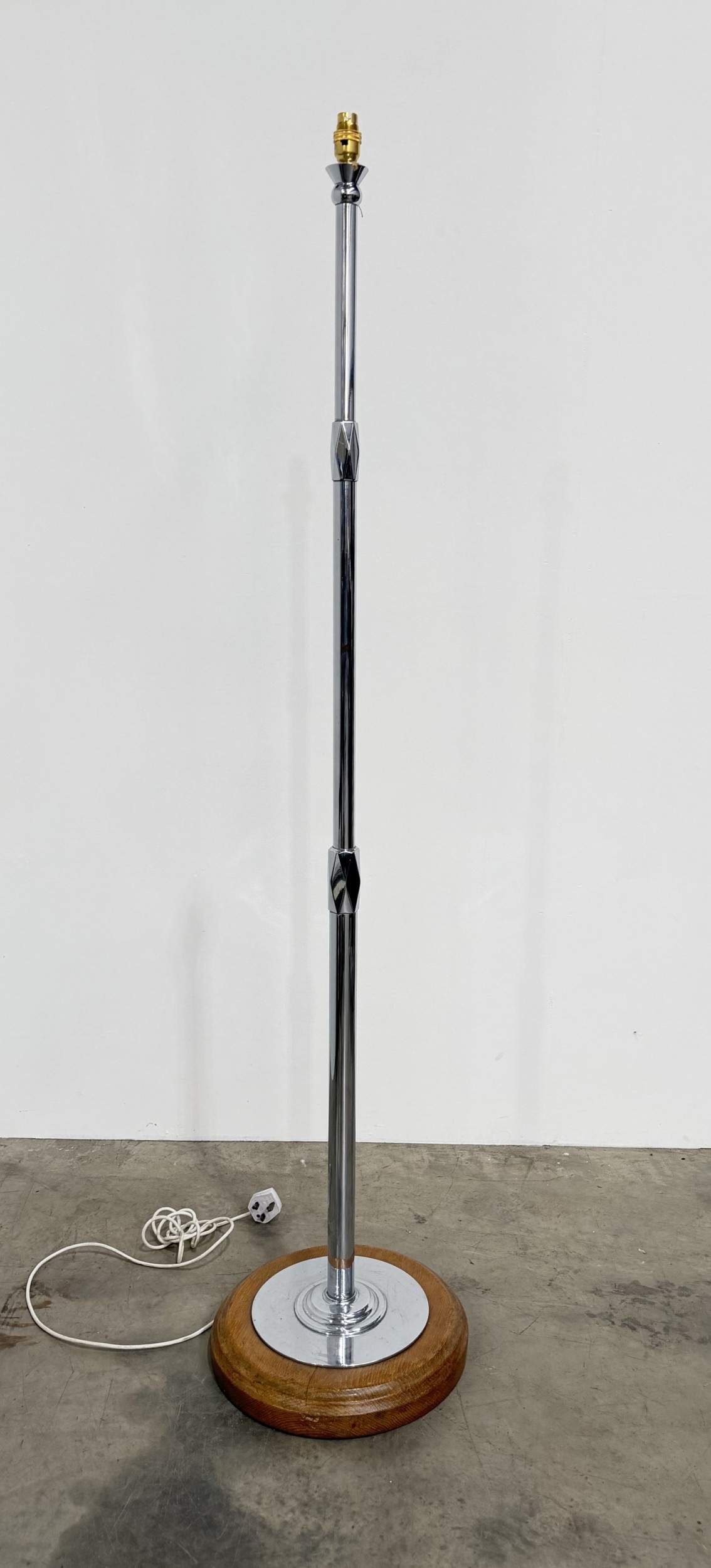
Primary live lot today
An Art Deco chrome standard lamp: a stepped cylindrical chromed pillar with faceted diamond shaped junctions on round oak base, h: 161cm, dia: 37cm, Lot 753
Auction house: Kinghams Auctioneers
View live lot listing
Estimate: £100-£150
Sale date shown in the listing: 26 Aug 2026
Catalogue title: An Art Deco chrome standard lamp: a stepped cylindrical chromed pillar with faceted diamond shaped junctions on round oak base, h: 161cm, dia: 37cm
Photo coverage: four verified catalogue images, with the post hero saved locally from the 1134x2500 full-size `.JPG` and a separate preview asset for homepage use
Why this lot is interesting
This is a lamp for buyers who want a room to change shape around one vertical object. The stepped shaft and those faceted junction blocks do most of the heavy lifting: they give the lot a machine-age crispness that upholstered interiors and softer occasional furniture do not provide on their own. The oak base matters just as much. Without it, a chrome standard lamp can feel all surface and no gravity. Here it gives the column somewhere believable to land.
The estimate is where the lot gets disciplined. At a hundred to a hundred and fifty pounds, this is still reachable decorative lighting, but it is no longer cheap enough to excuse tired plating, later electrical shortcuts, or a base that wobbles once you put a shade back on. Four images help because you can already read the major design thesis from the catalogue: not floral theatre, not carved Victoriana, but straight-line interwar glamour that depends on clean edges and calm proportion.
Who buys this and why
- Interwar interiors buyers: they want one vertical Deco accent that can sharpen a sitting room or study without needing a full period scheme.
- Design-led dealers and decorators: they are buying silhouette first, then deciding whether the chrome and electrics leave enough margin for a straightforward turnaround.
- Collectors of modest architectural lighting: they are less interested in maker legend than in whether the lamp still carries that 1930s geometry with conviction.
Condition pressure points
- Read the chrome for fatigue, not just shine: plating loss at the corners and junction blocks matters more than a soft glow in the main shaft.
- Check the faceted connectors closely: the whole design relies on those geometric transitions staying crisp rather than pitted or bent.
- Inspect the oak base as a structural partner: chips, splits, later screws, or movement where the pillar meets the plinth will make the lamp feel less designed and more assembled.
- Ask what survives of the electrical history: older standard lamps often live through several rewires, and neat modern work is far preferable to period-looking improvisation.
- Think about shade fit before you bid: the listing is selling the stand, not a complete room-ready lighting package, so fitter size and visual balance still need solving.
- Use the full 161cm height to your advantage: tall lamps show lean, twist, and base imbalance much more brutally in person than they do in a catalogue crop.
Comparator lots
These comparators stay inside the standard-lamp buying lane, but each shifts the proposition away from chrome Modernism and toward a different kind of decorative authority.
- A Victorian carved giltwood standard lamp, Lot 51 — Auction house: Killens Mendip Auction Rooms. Estimate: £50-£80. This is the ornament-first comparator. It shows how much today’s Kinghams lamp is asking buyers to pay for line and restraint rather than carving and period texture. view lot
- A Victorian brass extending paraffin standard lamp, Lot 316 — Auction house: Killens Mendip Auction Rooms. Estimate: £40-£60. This is the functional-history comparator. It helps show the premium that buyers place on a cleaner Art Deco silhouette over a more obviously old lighting form with stronger restoration baggage. view lot
- A gothic revival three branch standard lamp raised on an oak stand with cruciform base, Lot 1430 — Auction house: Wotton Auction Rooms. Estimate: £40-£60. This is the moodier alternative. It keeps the tall-room presence but moves from metropolitan chrome toward ecclesiastical revival drama, which makes today’s lamp look much more streamlined and urban by comparison. view lot
UK culture context
Art Deco lighting still sells in Britain because it belongs to a wider domestic fantasy of modernity, not just to one metal finish. The BBC’s old but still useful period-style guide makes the core point plainly: Deco interiors were about glamour, geometry, and the sense that the home could look technologically current without becoming cold. English Heritage’s material on Eltham Palace shows what that meant at room scale, where 1930s interiors used lighting effects, metal surfaces, and contrasting finishes to make modern living feel theatrical and controlled at the same time. That is exactly the lane this lamp is trying to enter.
The Art Deco Society UK also notes how mass production pushed chrome, glass, mirrors, and geometric furniture forms into ordinary British interiors by the 1930s. That matters for bidders because today’s lot is not museum-tier rarity. It is a credible piece of that broader domestic design language. If the chrome is still sharp and the form still feels deliberate, you are buying an object that can explain an entire room in one move.
- BBC Homes: Art deco period style — useful on the British appetite for geometric glamour, polished surfaces, and confident modern interiors.
- English Heritage: Significance of Eltham Palace — a clear UK reference for how 1930s lighting effects and new materials were used to sell domestic modernity.
- Art Deco Society UK: A Brief Introduction to Art Deco — helpful on how chrome hardware, glass, and geometric forms moved from luxury statements into mainstream modern style.
Bottom line
This is one of those lighting lots where the design is doing most of the talking, so the condition has to answer back clearly. The 2500px image family and four verified catalogue views are enough to justify serious interest, and the estimate is still fair if the chrome remains clean, the geometric joints stay crisp, and the base is as stable as it looks. If the finish is tired or the lamp needs more intervention than the listing suggests, the money becomes less attractive very quickly. If the surfaces hold up, though, this is a stylish way into interwar lighting without paying for a famous maker name.
Editorial analysis for educational purposes only. Final bidding decisions, fees, tax, shipping, collection, condition confirmation, and contract terms are handled by the auction house.