Daily Deep Dive · 26 Aug 2026 · Jewellery
Lot Spotlight: a Victorian floral brooch that has to move like a spray, not sit like scrap
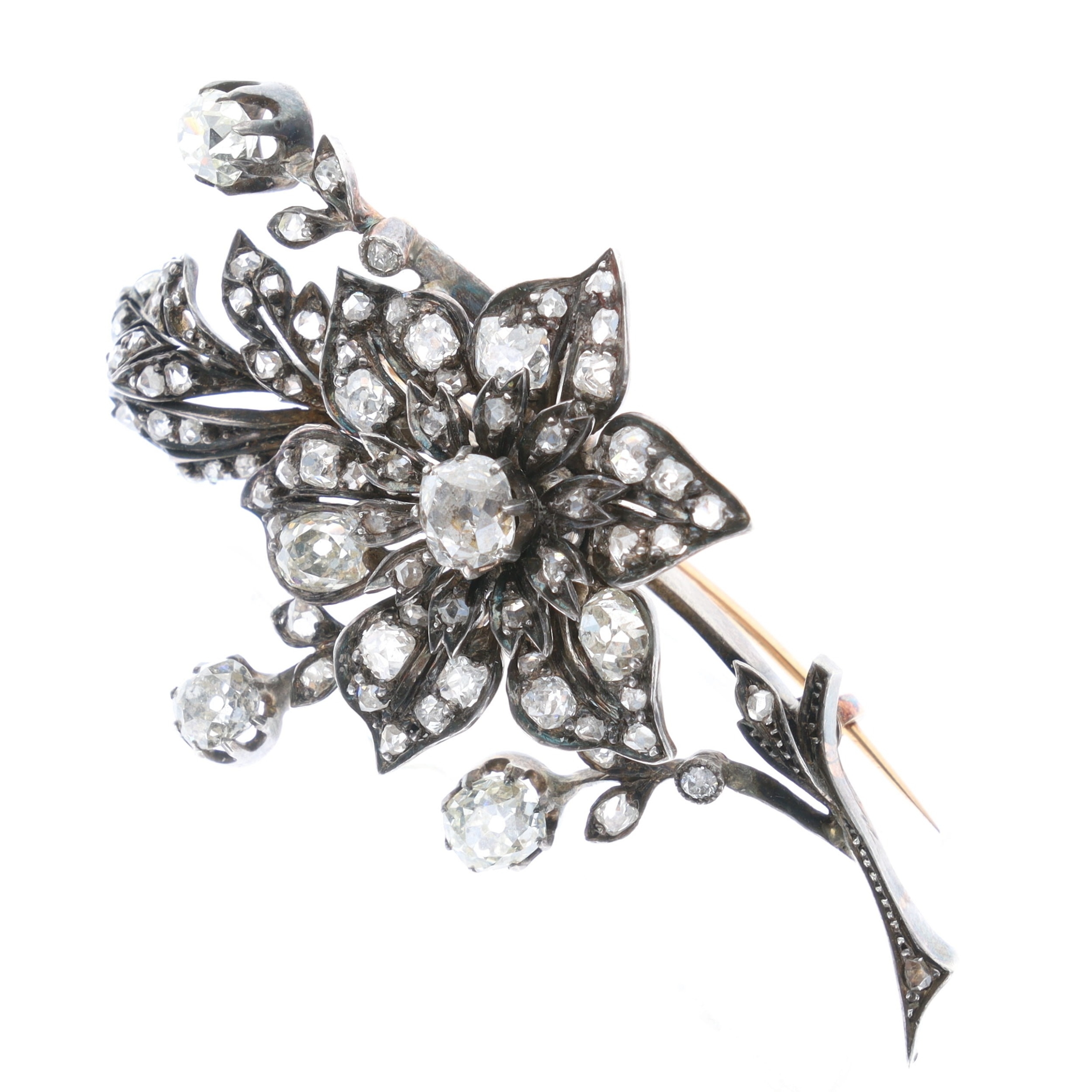
Floral diamond brooches only earn serious money when the metalwork still feels alive beneath the sparkle. Luxoris Auctions has a live antique old cut diamond gold and silver floral brooch, Lot 1, estimated at £800-£900 and backed by seven verified catalogue images, with the post hero saved locally from a 2500x2500 full-size image family and a separate 500x500 preview asset for homepage use. That is enough visual evidence to make this a real specialist judgement rather than a romantic Victorian shrug, because the lot already admits its pressure points: three missing diamond chips, age-related discolouration to the reverse, and lead solder securing the central flower. If the brooch still keeps its rhythm in spite of those compromises, there is a case. If not, you are paying for atmosphere that will turn into bench work very quickly.
Primary live lot today
Antique old cut diamond gold and silver floral brooch, 18.4g, Lot 1
Auction house: Luxoris Auctions
View live lot listing
Estimate: £800-£900
Sale window shown in the listing: 27 Aug 2026, 11:00 to 23:59:59
Catalogue title: Antique Old Cut Diamond Gold and Silver Floral Brooch, 18.4g
Photo coverage: seven verified catalogue images, with the post hero saved locally from the 2500x2500 full-size `.JPG` and a separate 500x500 preview asset for homepage use
Why this lot is interesting
This brooch lands in the narrow lane where Victorian jewellery stops being merely pretty and starts behaving like dress architecture. At 6cm across, it is large enough to matter on a jacket, bodice, or evening coat, and the best catalogue views show a proper spray composition rather than one static rosette. That matters because old-cut diamond flower pieces live or die on movement. You want staggered heads, convincing leaf transitions, and enough negative space that the brooch still breathes when worn instead of looking like a glittering patch.
The appeal is not purity. Luxoris is already telling bidders where the compromises sit, which is useful. Three missing chips and the soldered central flower mean this is not a museum-clean survivor. The bet is that the object still has enough authority for those flaws to read as survivable history rather than structural apology. Seven images give you a fair chance to test that before bidding.
Who buys this and why
- Antique jewellery collectors: they want a substantial old-cut brooch with enough scale and period line to justify specialist attention, even if it is not pristine.
- Dealers and private buyers who wear brooches rather than box them: they are buying silhouette, spread, and sparkle-on-cloth, then pricing the repairs with cold blood.
- Buyers crossing over from decorative arts into jewellery: they may be less obsessed with stone perfection than with whether the brooch still performs as a dramatic Victorian object.
Where the risk sits
- Start with the missing diamond chips: the listing discloses three losses, so ask yourself whether the gaps sit quietly inside the overall spray or interrupt the design every time your eye lands on the flower heads.
- Treat the lead solder as a real condition issue, not a footnote: a soldered central flower may be stable, but it also tells you the brooch has already needed intervention at the point where the composition carries its visual weight.
- Read the reverse as hard as the front: age-related discolouration can be honest, but you still want to know whether the back is merely old or carrying earlier repairs, stress, or thinning around the pin assembly.
- Check that the pin and clasp still look equal to the scale: 18.4g is enough mass to expose a tired hinge or catch once the brooch is actually worn on fabric.
- Use the seven-image set to judge articulation: floral brooches stop working when the leaves and blossoms collapse into one dense patch, so watch for whether the separate heads still read distinctly from one another.
- Remember that old-cut sparkle is softer by design: do not mistake period stone character for lifelessness, but do ask whether dirt, chips, or tired settings are flattening the light more than the age alone should.
Comparator lots
These comparators stay inside the same Luxoris brooch lane, which is useful because the fees, photography style, and bidding audience are all shared. The question is not whether brooches in general are fashionable. It is what sort of brooch story you want this sale to tell.
- Victorian Turquoise and Diamond Moon Crescent Gold and Silver Brooch, Lot 4 — Auction house: Luxoris Auctions. Estimate: £340-£380. This is the strongest symbolic comparator. It asks far less money and swaps naturalistic floral movement for a tighter crescent silhouette, which helps show how much of today’s estimate is really about scale and spray complexity. view lot
- Georgian Halleys Comet Foil Backed Paste and Amethyst Gold Brooch, Lot 5 — Auction house: Luxoris Auctions. Estimate: £90-£120. This is the history-rich but lower-stakes comparator. It keeps the brooch format and period romance alive while reminding bidders how quickly the market price falls once paste, foil-back fragility, and smaller scale replace old-cut diamond status. view lot
- Edwardian Gold Photograph Locket Fan Brooch, Lot 9 — Auction house: Luxoris Auctions. Estimate: £160-£200. This is the mechanism comparator. It shows the sale offering a brooch whose value sits in novelty and survivorship rather than in gemstone spread, which makes today’s floral lot look far more dependent on overall visual command. view lot
UK culture context
The V&A’s recent overview of jewellery history is useful here because it describes exactly the kind of late-19th-century flower spray logic this lot needs to sustain: bodice ornaments with separate diamond flowers designed to catch light and animate the wearer rather than sit flat like buttons. That is the standard you should hold this brooch to. If the heads, leaves, and stems no longer create that sense of lift, then the Victorian floral story is doing more work than the object itself.
The broader flower language matters too. BBC Culture’s piece on floriography is a reminder that Victorian buyers were happy to load flowers with coded emotion, flirtation, and social performance. A large floral brooch was never just decoration. It was part of a public dress vocabulary. The V&A’s catalogue note on William Burges’s brooch takes that symbolism into jewellery history more directly, pointing out how turquoise flower colour would have spoken of love in Victorian floral language. Today’s Luxoris lot is less literary than that Gothic-revival example, but the same principle applies. A floral brooch at this level has to feel animated and intentional, not generically botanical.
- V&A: A history of jewellery — helpful on 19th-century flower-spray jewels worn as bodice ornaments and designed to maximise movement, sparkle, and dress impact.
- BBC Culture: The flowers that send a hidden message — useful Victorian context for how floral motifs carried coded feeling and social meaning beyond simple prettiness.
- V&A Collections: Brooch by William Burges — useful on Victorian flower symbolism in jewellery and how floral colour and motif could carry coded emotional meaning rather than serving as neutral ornament.
Bottom line
This is a brooch for buyers who can separate charisma from innocence. The seven-image catalogue set and 2500px local hero are strong enough to justify attention, and the floral spread has real room presence if the workmanship still holds together in person. But the risks are not theoretical: the missing chips, the soldered central flower, and the disclosed reverse discolouration all need pricing in before the romance starts. If you want a cleaner piece, look elsewhere. If you want a large Victorian flower spray with honest wear and enough visual authority to survive it, this one has a plausible case.
Editorial analysis for educational purposes only. Final bidding decisions, fees, tax, shipping, collection, condition confirmation, and contract terms are handled by the auction house.