
Daily Deep Dive · 28 Aug 2026 · Wine & Spirits
Lot Spotlight: an osprey decanter that only works if the bird still wins the argument
Animal-form whisky ceramics get flimsy very quickly when the novelty arrives before the modelling. Hamilton Square Auctioneers has a live Beswick Osprey ceramic sealed blended Scotch whisky liquor bottle, Lot 53, estimated at £20-£40 and backed by five verified catalogue images, with the post hero saved locally from a 2500x3333 full-size image family and a separate 500x500 preview for the homepage. That is enough to make this a practical small-collector decision rather than a souvenir impulse, because the appeal is unusually concentrated: one 20cm bird, one modeller name, one sealed bottle, and just enough photography to show whether the ceramic still carries authority once you stop being charmed by the idea of whisky in feathers.
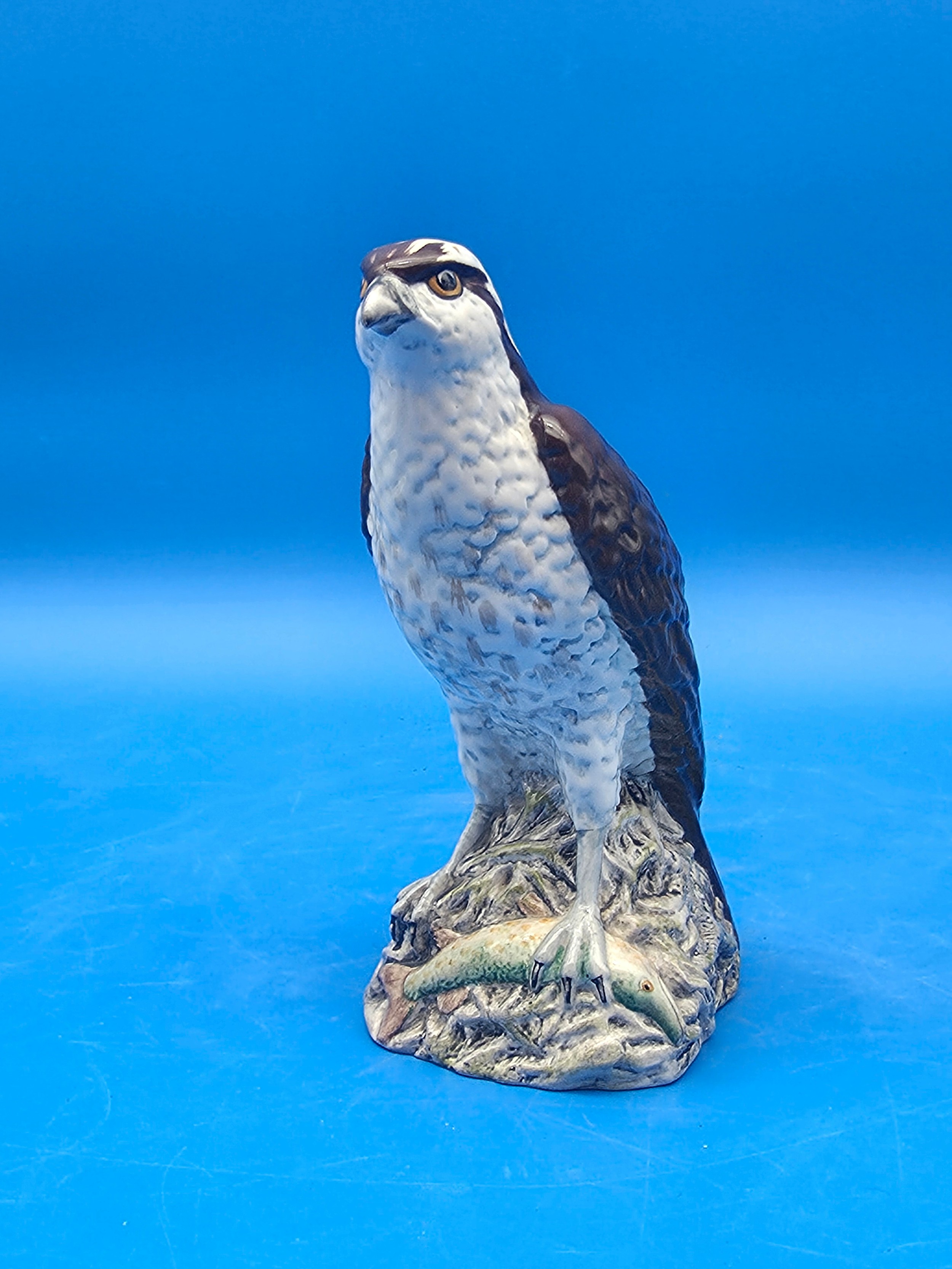
Primary live lot today
Beswick Osprey ceramic sealed blended Scotch whisky liquor bottle, modelled by D. Lyttleton, 1977, Lot 53
Auction house: Hamilton Square Auctioneers
View live lot listing
Estimate: £20-£40
Sale window shown in the listing: 29 Aug 2026, 11:00 to 23:59:59
Catalogue title: Beswick Osprey Ceramic sealed blended Scotch Whisky liquor bottle. Modelled by D. Lyttleton 1977.
More information shown in the listing: Sealed bottle good condition
Photo coverage: five verified catalogue images, with the post hero saved locally from a 2500x3333 full-size `.JPG` and a separate 500x500 preview asset for homepage use
Why this lot is interesting
This is the sort of low-estimate lot dealers quietly like because it lives in more than one lane at once. It is a whisky object, but the catalogue is really selling a piece of British ceramic modelling with liquid still trapped inside it. The D. Lyttleton attribution gives the lot a real handle, and the 1977 dating matters because it puts the decanter in the long afterlife of Staffordshire novelty ceramics rather than in the later generic giftware world.
The stronger buying case is that the listing does not need myth to stay interesting. Five images are enough to show profile, base, neck, and surface, while the estimate stays low enough that condition discipline matters more than label glamour. If the osprey keeps its beak, tail, paint definition, and seal without looking tired around the neck, this reads as a neatly resolved display object. If those details soften, you are left with a bottle dressed as a bird and not much more.
Who buys this and why
- Beswick and British animal-ceramic buyers: they want the modeller attribution, the 1977 date, and a bird that still looks sharp enough to stand as pottery even before the whisky story begins.
- Whisky advertising and barware collectors: they are buying a sealed branded object with shelf presence, not a drinking bottle, so completeness and visual theatre matter more than rarity of spirit.
- Small-space interiors buyers: they may like a single comic-but-convincing accent piece because it gives a shelf personality without committing to a whole run of miniatures or pub signage.
Where the pressure sits in the photos
- Read the head first: on a bird-form decanter the beak, brow, and eye line do most of the work, so any soft repainting or glaze wear there will flatten the whole object.
- Check the neck and seal together: sealed is helpful, but only if the cork area does not show chips, forced movement, or staining that suggests a less tidy life than the listing implies.
- Watch the wing edges and tail tips: projecting ceramic details are exactly where novelty bottles stop feeling collectible and start feeling chipped.
- Use the side profiles to judge modelling depth: the bird needs enough chest, claw, and wing definition to look intentional from across a room, not only in a front-on catalogue shot.
- Do not ignore the base: rocky bases on pieces like this can hide rubbing, old adhesive, or losses that make the decanter feel more decorative than well-kept.
Comparator lots
The useful comparator question here is not simply whether you want old Scotch ceramics. It is whether you want one decisive bird, one comic miniature, or a mixed shelf that spreads the same collecting instinct across several forms.
- A small Beneagles Scotch whisky Beswick haggis, 7cmH, Lot 64 — Auction house: Stuart Auctions, Enniskillen. This is the scale comparator: one tiny joke object with much less display authority, but a clearer single-form proposition if you prefer miniature charm to shelf-dominating modelling. view lot
- Beneagles and Old St. Andrews ceramic Scotch whisky miniature decanters by Beswick, Lot 1172 — Auction house: Doncaster Auction Centre. This is the shelf comparator. It shows what happens when the same Scottish drinks-ceramics appetite turns from one clean form into a busier mixed gathering of animals, golf pieces, and novelty shapes. view lot
- A 1977 Beswick Beneagles Osprey whisky decanter, full and sealed, Lot 9 — Auction house: Canalbank Auction. This is the closest like-for-like comparator, useful because it frames how much today’s buying call rests on survival and presentation rather than on any unusual narrative beyond the form itself. view lot
UK culture context
Lots like this make more sense in Britain than they might at first glance because they sit at the junction of two durable habits: whisky as national branding and ceramics as everyday display culture. The Scotch Whisky Association has long pointed to the scale of distillery tourism in Scotland, which helps explain why whisky objects travelled so easily into souvenir, gift, and shelf-display territory. Heritage Crafts, meanwhile, still treats industrial pottery as a living British craft story rooted in the Staffordshire Potteries, which is the manufacturing backdrop that makes a piece like this feel culturally ordinary in the best sense rather than like a one-off gimmick.
There is also a smaller collector-language point here. Royal Doulton’s own brand history still leans on the company’s long story of figurative and decorative wares, and that broader British appetite for animals, characters, and narrative ceramics is the same climate in which a whisky osprey remains legible. No credible social or market-pulse source added enough value today to improve that reading, so it is better to stay with the object.
- Scotch Whisky Association: Scotch Whisky distillery visits reach 2 million — useful on how whisky moved beyond drink into a broader Scottish visitor and gift economy.
- Heritage Crafts: Industrial pottery — helpful background on the Staffordshire production world that kept British novelty and figurative ceramics commercially alive.
- Royal Doulton: Our Story — a concise official reminder that British decorative ceramics have long traded on narrative, character, and display value as well as utility.
Bottom line
This is a modest lot with a clean thesis. Hamilton Square Auctioneers is offering one sealed 1977 osprey with five usable images and a sensible estimate, which is enough to justify a bid from anyone who likes British ceramic animal forms and does not need the liquid inside to be the main event. The danger is not hidden rarity or hidden upside. It is overpaying for a joke that only remains funny if the modelling is still crisp. If the neck, beak, and tail hold up, this is an easy shelf buy. If they do not, leave it to someone collecting labels rather than objects.
Editorial analysis for educational purposes only. Final bidding decisions, fees, tax, shipping, collection, condition confirmation, and contract terms are handled by the auction house.