
Daily Deep Dive · 31 Aug 2026 · Furniture
Lot Spotlight: a Meredew wall unit that has to earn its footprint before the cocktail flap gets all the attention
Big mid-century storage only works when every section is pulling in the same direction. Chorley Auction House Ltd has a live Meredew modular display unit with a drop-down cocktail cabinet and lower sideboard storage, Lot 463, offered with six verified full-size catalogue images and dimensions of 200x165x45cm. That is enough to make this a real room-planning decision rather than a drinks-cabinet daydream, because the useful buying case is structural: glass doors, open shelving, lit display space, a felt-lined drop front, and a long run of cupboards all need to read as one calm piece of British domestic furniture instead of a lot of features packed into one glossy silhouette.
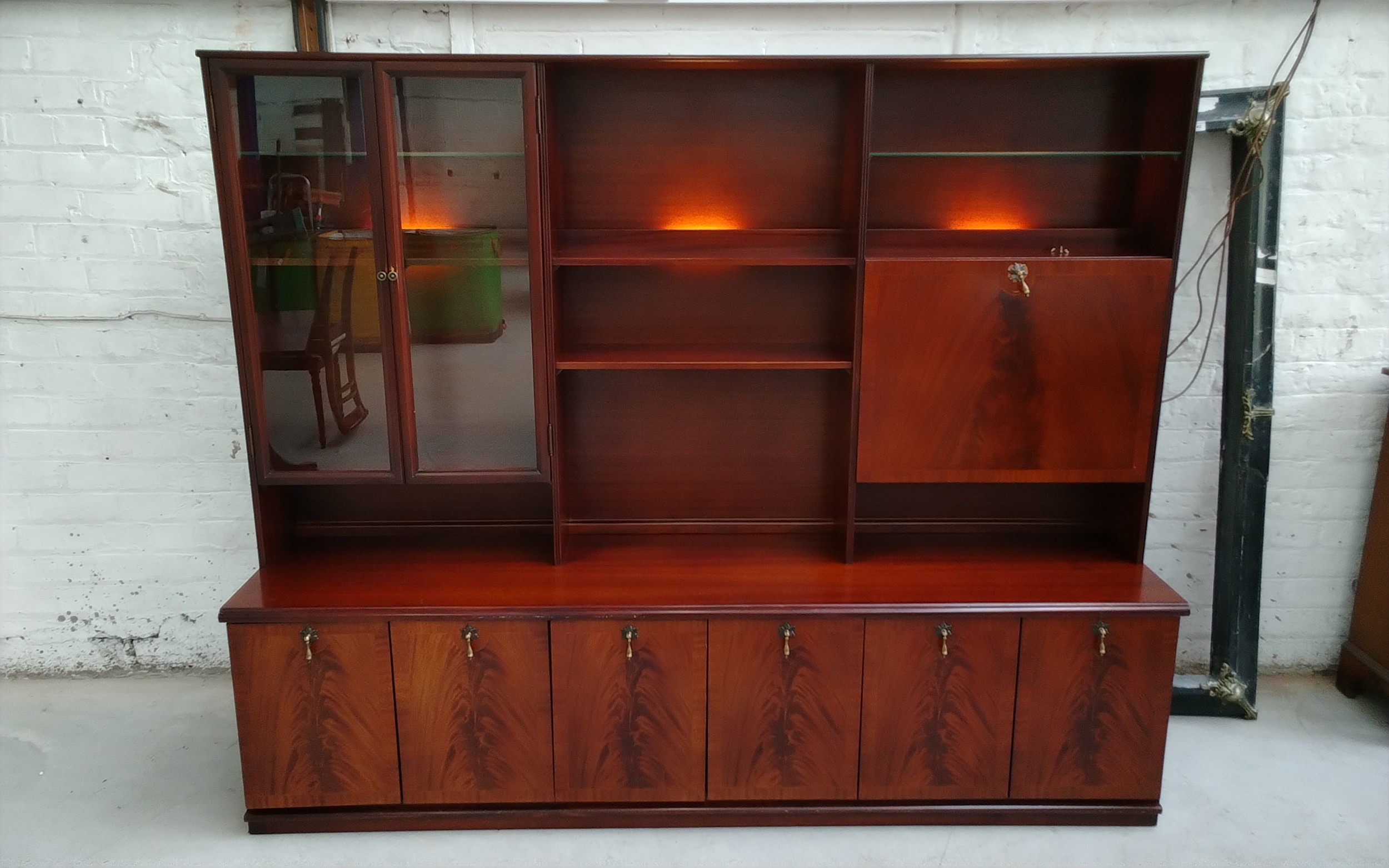
Primary live lot today
Mid Century Meredew Modular Display Unit with Upper Display Unit Housing a Drop-down Cocktail Cabinet and a Lower Sideboard with Three Cupboard Twin Door Storage housing a Felt Lined Cutlery Drawer, Lot 463
Auction house: Chorley Auction House Ltd
View live lot listing
Estimate: No estimate published
Sale date shown in the listing: 31 Aug 2026
Catalogue detail: integrated backlighting stated as fully working, lovely polished condition, and top display section removable for transport or local delivery by arrangement
Size: 200x165x45cm
Photo coverage: six verified full-size catalogue images, with the post hero saved locally from a 2500x1563 full-size `.JPG` and a separate 500x500 preview asset for homepage use
Why this lot is interesting
This is exactly the sort of lot that can look solved before it has proved anything. Meredew sits in that broad, attractive British mid-century lane where veneers glow warmly, storage is built around actual domestic use, and one piece can carry books, glassware, and the fantasy of being more organised than you currently are. The drop-front cocktail section makes it more memorable, but it should not be the whole story. The real strength is that the cabinet still appears to have enough length, proportion, and internal variety to function as a wall unit first and a conversation piece second.
The image set helps because it shows more than a flattering frontal shot. You can see the open cabinet, the green-lined drop front, the side profile, and a Meredew label still present on the carcass. That does not remove the usual risks. It does mean buyers can ask better questions. Is the lighting simply switched on for the photo, or is it safe and sensibly wired? Are the glass doors hanging square? Has the polish sharpened the veneer, or hidden edge wear and small bruises that will read much more loudly at home than they do in a warehouse-light catalogue image?
Who buys this and why
- Private buyers furnishing one main living room wall: they want proper storage, display, and a touch of cocktail-era theatre without buying separate pieces that never quite resolve into one composition.
- Dealers in accessible mid-century British furniture: they are buying usable scale, maker-label confidence, and a piece that can sell on room function as much as on period taste.
- Hospitality and short-stay interior buyers: they may like the bar flap, lighting, and long sideboard base because the unit can stage glassware and conceal clutter in one move.
Where the risk sits
- Read the glazed section as joinery, not sparkle: the double doors need even gaps, calm hinges, and shelves that do not suggest later improvisation.
- Slow down at the drop-front cocktail compartment: ask whether the flap opens and supports cleanly, whether the green lining is original or refreshed, and whether the lock furniture is complete.
- Interrogate the lighting claim: “fully working” is helpful, but it is not the same thing as inspected, modernised, or PAT tested, so buyers should ask how the integrated backlighting is wired.
- Watch the long top surface and cupboard run: a unit this wide cannot hide warping, waviness, or veneer lifting once it is in domestic light.
- Use the side and label photographs properly: the side shot shows how much visual bulk you are really buying, while the Meredew badge is reassuring only if the rest of the carcass still feels consistent with it.
Comparator lots
The best comparators stay in the same room-function lane rather than chasing exact maker matches. What matters here is how buyers price one wall of storage when the piece is trying to be bookcase, sideboard, and drinks cabinet at the same time.
- Mid Century Stag Minstrel Slimline Book Display Unit with Two Adjustable Shelves, Lot 455 — Auction house: Chorley Auction House Ltd. This is the pared-back display comparator: much slimmer, much simpler, and useful because it shows how quickly value changes once the cocktail and sideboard elements disappear. view lot
- A mid-century teak sideboard with fall front, double cupboard doors and three drawers, Lot 201 — Auction house: Richard Winterton Auctioneers. Estimate: £100-£150. This is the storage-first comparator. It helps anchor what buyers are being asked to pay for when the same period appeal is delivered without the vertical display section. view lot
- Art Deco cocktail cabinet featuring central glass tube decorations, Lot 489 — Auction house: Walton & Walton. This is the drinks-theatre comparator. It shows the opposite buying temperament: a cabinet where the bar idea is the whole point, which is useful when testing whether today's Meredew still earns space as furniture first. view lot
UK media & culture context
British buyers still understand this kind of piece instinctively because mid-century storage furniture here was never just about putting things away. It was about staging a room. Antique Collecting's guide to British mid-century sideboards is useful because it places the whole field in a recognisable domestic-design story, from mainstream branded furniture to better-known designer names, and treats sideboards and storage pieces as one of the category's most durable collecting lanes. House & Garden's recent home-bar feature makes the decorative point from the other end: glossy cabinets, mirrored shelving, and built-in drinks rituals still carry obvious aspirational pull in British interiors. The V&A's furniture collection is the broader reminder that display, storage, and craftsmanship have long been bound together in British furniture culture. That is exactly why this Meredew lot is interesting. It is trying to satisfy all three at once.
- Antique Collecting: British Mid-Century Sideboards, The Ultimate Guide — useful collector context for why British storage furniture remains one of the most legible mid-century buying lanes.
- House & Garden: Home bar ideas — helpful on how drinks display and cabinetry still operate as a live interiors language rather than a dated gimmick.
- V&A: Furniture collection — a broad museum backdrop for understanding British furniture as a long-running conversation between utility, display, and surface finish.
Bottom line
This is worth attention if you need one substantial piece to organise a room and you are willing to check the practical bits as hard as the veneer. Chorley Auction House Ltd has provided enough photography to make that possible. Bid when the glass hangs cleanly, the drop front behaves properly, and the lighting story checks out. If the polish is doing more work than the structure, let someone else buy the glow.
Editorial analysis for educational purposes only. Final bidding decisions, fees, tax, shipping, collection, condition confirmation, and contract terms are handled by the auction house.