
Daily Deep Dive · 1 Sep 2026 · Ceramics
Lot Spotlight: a five-inch William Moorcroft Orchid vase that has to prove itself at the foot rim
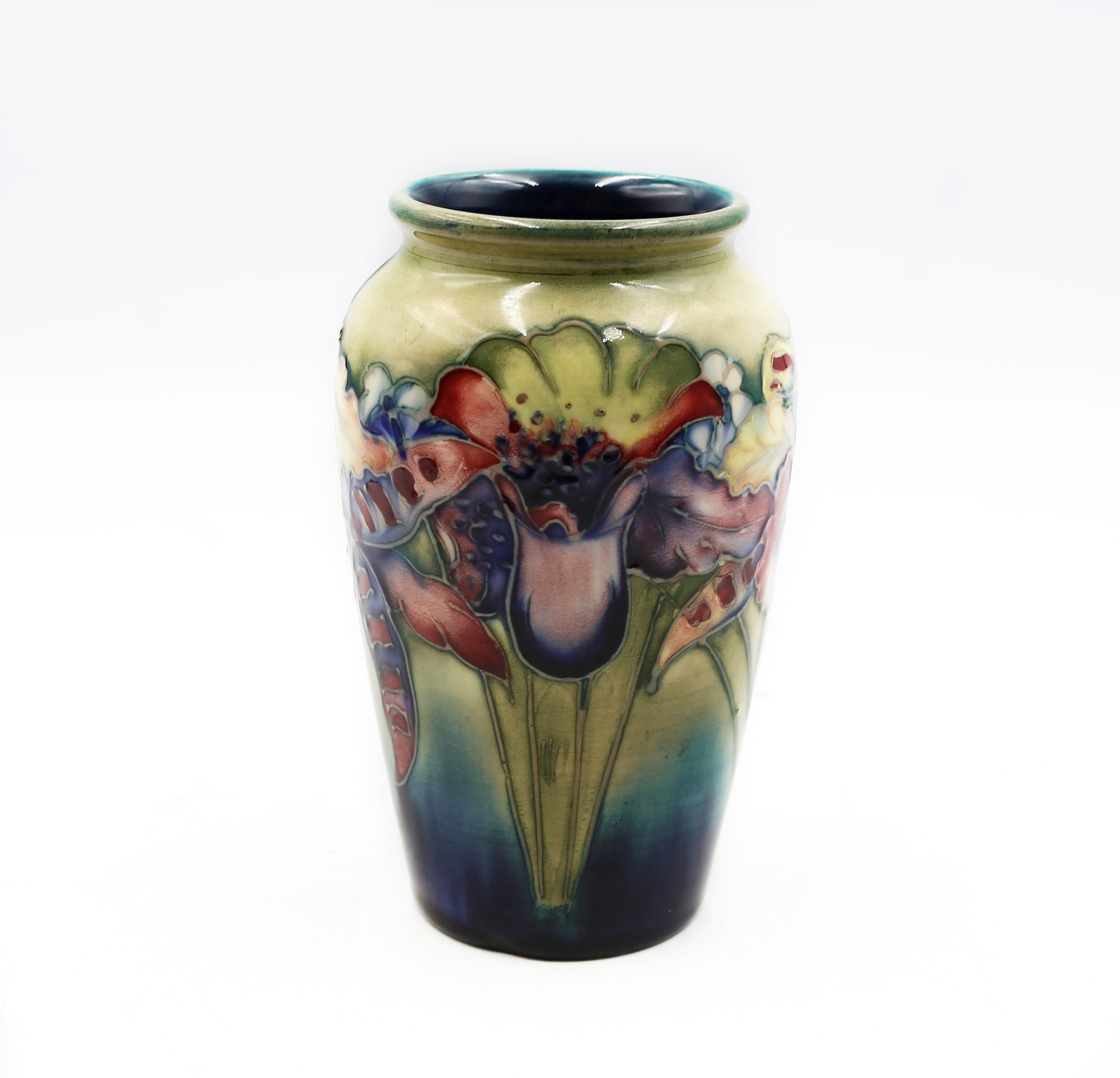
Small Moorcroft pieces do not get a free pass just because the flower pattern is charming. Hansons Auctioneers has a live William Moorcroft Orchid vase, Lot 234, backed by six verified full-size catalogue images, a clean no-restoration condition note, and a 2500x2407 local hero saved from the full `.JPG` image family. What makes it worth attention is concentration rather than scale: five inches of pottery are being asked to carry the impressed signature, the H.M. The Queen wording cited in the listing, the Made in England mark, and enough tube-lined authority to feel like founder-period Moorcroft rather than a small decorative afterthought.
Primary live lot today
A small 'Orchid' design William Moorcroft vase, Lot 234
Auction house: Hansons Auctioneers
View live lot listing
Estimate: Not shown in the listing
Sale date shown in the listing: 2 Sep 2026
Catalogue detail: impressed signature, H.M. The Queen wording, Made in England wording, 5" high, and no signs of crazing, damage or restoration
Photo coverage: six verified full-size catalogue images, with the post hero saved locally from a 2500x2407 full-size `.JPG` and a separate 500x500 preview asset for homepage use
Why this lot is interesting
This is a founder-era buying lane in miniature. Orchid decoration is one of those Moorcroft patterns that can look easy until you ask whether the potting, raised outline, and colour transitions still hold their nerve at close range. On a five-inch vase, there is nowhere for weakness to hide. If the shape is right and the tube-lining still reads cleanly, the small scale becomes a virtue because you are buying concentrated character instead of paying for mere bulk.
The six-image set is what makes this publishable rather than just attractive. Buyers can see the body, rim, profile, and base, which means the clean condition note is doing real work instead of floating unsupported above one flattering frontal shot. The missing estimate actually sharpens the decision. Without a public price anchor, the value argument rests more heavily on mark clarity, glaze honesty, and whether the foot tells the same story as the front.
Who buys this and why
- William Moorcroft collectors: they want founder-period material with recognisable pattern language and enough base evidence to distinguish a serious small piece from later decorative spillover.
- Private buyers stepping into British art pottery: they may prefer a compact vase like this because it offers real Moorcroft authorship without demanding the space or capital of a much larger flambé showpiece.
- Dealers in labelled decorative ceramics: they are buying legibility as much as beauty, so crisp marks, a settled foot, and believable condition matter more than simple floral charm.
What the six photos need to prove
- Read the base before the flowers: the impressed signature and the other wording cited in the listing need to be crisp enough to support the founder-period pitch without imaginative filling-in.
- Be ruthless at the rim: on a vase this small, the tiniest chip or hairline will change the buying case far more than it would on a larger decorative pot.
- Check the tube-lined orchid outlines: the raised lines should look intentional and confident, not rubbed down, washed out, or softened by over-cleaning.
- Use the profile shot properly: small Moorcroft needs a calm silhouette, because any wobble in the potting or unevenness in the neck will read immediately in person.
- Watch for glaze honesty: the listing says no crazing, damage, or restoration, so the close views should not show suspiciously dead patches, repolished gloss, or abrupt colour breaks.
Comparator lots
The useful comparator question here is not only whether you prefer orchids to hibiscus. It is whether you want one compact founder-era statement, a later clean-condition cabinet piece, or a more decorative pair that carries visible compromise.
- TWO MOORCROFT POTTERY VASES including Combermere and Coneflower examples, Lot 894 — Auction house: Richard Winterton Auctioneers. This is the pair-and-condition comparator: more scale and more colour, but one repaired rim with an area of loss, which helps show how quickly value turns once visible compromise enters the room. view lot
- Moorcroft vase in the Anemone pattern, tribute to Emma Bossons, Lot 167 — Auction house: Warrington & Northwich Auctioneers & Valuers. This is the later-maker comparator. It keeps the familiar floral pull, but the buying case sits in modern Moorcroft collectability rather than in William Moorcroft's own period authority. view lot
- Moorcroft Pottery vase 'Cranesbill' by Emma Bossons, Lot 278 — Auction house: Bentley's Fine Art Auctioneers. This is the clean modern cabinet-piece comparator: taller, boxed, and described with no condition issues, which is useful if you want decorative certainty more than founder-era edge. view lot
UK culture context
BBC reported in April that a circa-1925 Moorcroft vase had made £41,984, a world record for a single piece, after a bidding battle at Kinghams. Today's lot is nowhere near that price bracket, but it belongs to the same William Moorcroft story, which is exactly why a small Orchid vase can still matter: founder-era pieces keep their pull because buyers trust the pottery history before they trust the decoration.
The wider British context is specific too. BBC also reported in May that Moorcroft Pottery was thriving again in Stoke-on-Trent after being rescued by the founder's grandson, while Heritage Crafts still treats industrial pottery as part of the Staffordshire skills base under pressure. That makes this lot more than a pretty floral cabinet piece. It reads as a compact bit of Potteries continuity, which is precisely the sort of thing collectors in the UK still understand instinctively.
- BBC News: Vase designed in Stoke-on-Trent sells for 'world record' price — a clear market-pulse reference showing that early Moorcroft still attracts aggressive bidding at the top end.
- BBC News: Moorcroft Pottery in Stoke on Trent thriving a year after closure — useful on the pottery's live cultural position in Staffordshire rather than treating Moorcroft as a closed chapter.
- Heritage Crafts: Industrial pottery — a broader British craft context for why Stoke-on-Trent ceramics still carry historical and material weight.
Bottom line
This is the kind of small Moorcroft lot that makes sense only if the evidence stays crisp. Hansons Auctioneers has shown enough of the rim, body, and base to justify real interest, and the clean condition note gives bidders a straightforward standard to test against. Bid if the impressed wording and orchid tube-lining are as sharp in hand as they look in the catalogue. If the foot reads rubbed, the glaze looks tired, or the tiny scale starts feeling apologetic rather than concentrated, wait for a larger piece with less interpretive work to do.
Editorial analysis for educational purposes only. Final bidding decisions, fees, tax, shipping, collection, condition confirmation, and contract terms are handled by the auction house.