
Daily Deep Dive · 2 Sep 2026 · Lighting
Lot Spotlight: a Walkerlite lamp that only works if the chrome still feels architectural
A chrome table lamp has nowhere to hide once the metal starts telling the truth. RWB Auctions has a live mid-century Art Deco-style chrome and glass table lamp with shade, stamped Walkerlite to the base, Lot 293, estimated at £30-£50 and offered with three verified full-size catalogue images. The useful tension is already in the description: a maker stamp, a 32cm height confirmation, and an admitted note of pitting, discolouration, and untested electrics. That makes this a design judgement rather than a blind decorative punt, because the lamp only earns its keep if the stepped chrome, glass detail, and fringed shade still read as one composed silhouette instead of one honest old fitting being flattered by a photogenic top.
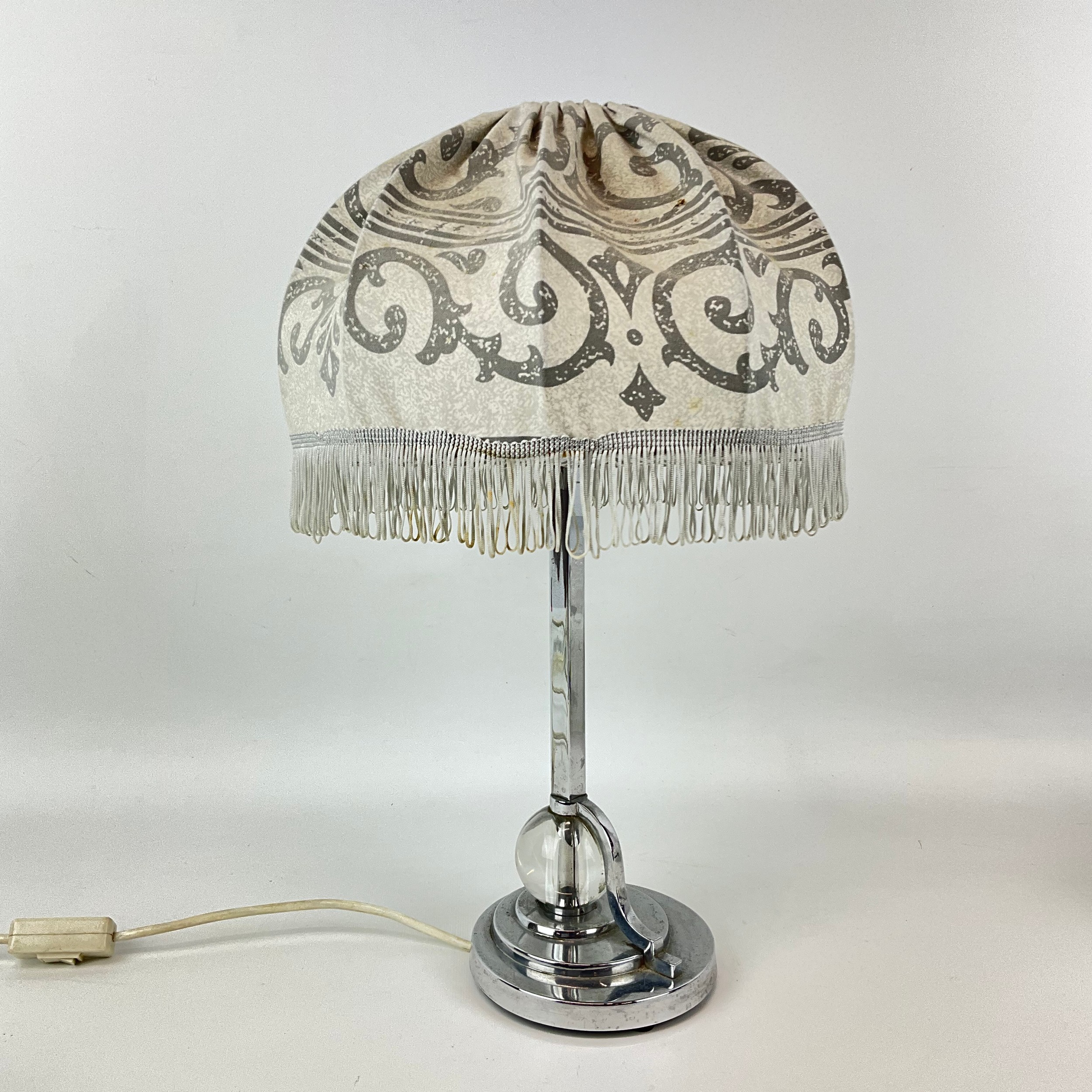
Primary live lot today
A mid-century Art Deco-style chrome and glass table lamp with shade, stamped Walkerlite to the base, Lot 293
Auction house: RWB Auctions
View live lot listing
Estimate: £30-£50
Sale date shown in the listing: 2 Sep 2026 at 10am BST
Catalogue detail: stamped Walkerlite to the base, sold with shade, untested for electrical safety, and sold as seen
Additional note: RWB confirms some pitting and discolouration to the chrome and an approximate height of 32cm
Photo coverage: three verified full-size catalogue images, with the post hero saved locally from a 2500x2500 full-size `.JPG` and a separate local preview asset from the source `_PREVIEW` image
Why this lot is interesting
Walkerlite is not being asked to win on glamour alone here. The stamp matters because chrome-and-glass table lamps can drift into anonymous repro territory very quickly once the base, stem, and fitting stop agreeing with one another. This one has enough geometric discipline in the round base, clear glass orb, and upright chrome shaft to suggest a real period-minded object rather than a generic retro prop. At this estimate, buyers are not paying for perfection. They are paying for whether the lamp still carries conviction from socket to foot.
The admitted flaws actually help. Pitting and discolouration are not pleasant, but they are better than suspicious silence on a reflective surface. Three images are enough to test whether the wear sits like age or like neglect, and whether the fringed shade is helping the composition or merely distracting from the metalwork. In other words, this is a small lot where honesty is part of the appeal.
Who buys this and why
- Interwar and Deco interior buyers: they want one compact accent lamp that can put chrome, curve, and softness into a side table or drinks corner without needing a full room of period furniture.
- Dealers in accessible 20th-century lighting: they are buying silhouette first, then checking whether the maker stamp and visible wear still leave enough margin after rewiring and cleaning.
- Private buyers who prefer lived-in originality to restoration theatre: they may accept honest pitting if the lamp still feels balanced, usable, and visually sharper than a pristine later reproduction.
Condition pressure points
- Read the chrome in the hard light: the listing already admits pitting and discolouration, so buyers need to decide whether that wear sits quietly on the surface or breaks the lamp's clean Deco lines.
- Check the Walkerlite stamp properly: a maker name helps only if it is crisp enough to be legible and consistent with the rest of the base rather than a detail you have to talk yourself into.
- Separate the shade from the structure: the fringed shade is atmospheric, but the buying case still lives in the base, stem, and glass orb. If the metalwork looks ordinary without the textile top, the lot gets weaker fast.
- Treat the electrics as future work: RWB says the lamp is untested for electrical safety, so bid on the assumption that rewiring, a plug change, or a fuller inspection may be part of the post-sale cost.
- Use the profile shot for balance: table lamps of this sort fail when the stem leans, the base looks over-polished, or the glass element feels like an awkward insert rather than part of one deliberate design.
Comparator lots
The right comparators here are not all exact maker matches. They are nearby buying lanes: other chrome lamps, other Deco-minded table formats, and one lamp where the opaline shade carries more of the burden than the metal does.
- A pair of mid-century chrome lamps, Lot 291 — Auction house: RWB Auctions. Estimate: £40-£60. This is the quantity-versus-character comparator. Buyers get two matching chrome lamps with octagonal stems, but without the named Walkerlite stamp or the glass-orb flourish that makes today's lot more individual. view lot
- Temde-Leuchten Art Deco revival table lamp with opaline glass shade and marquetry inlay, Lot 174 — Auction house: Warrington & Northwich Auctioneers & Valuers. Estimate: £60-£80. This is the maker-and-material comparator. It moves away from chrome severity into warmer marquetry and opaline, which helps show whether you want architectural coolness or a softer decorative read. view lot
- An Art Deco desk lamp with goose neck flexible arm, with a brass rise-and-fall table lamp and opaline glass shade, Lot 664 — Auction house: P.F. Windibank. Estimate: £25-£40. This is the utility-led comparator. The pair gives buyers more moving parts and more obvious workshop character, which is useful if you want function and adjustment rather than one cleaner side-table statement. view lot
UK culture context
British buyers still have a ready eye for Art Deco because the style remains woven into the country's interiors memory, from hotel foyers to seaside apartment blocks. The V&A's Art Deco collection is useful here because it frames the period as a cross-material design language, not a single-object fad: metalwork, glass, furnishings, and surface pattern all belong in the same conversation. That matters for a lamp like this. Buyers are not only judging whether the chrome is bright. They are judging whether the whole object still speaks the right period accent.
House & Garden's recent argument for giving Art Deco another look lands in the same place from a living-room angle: streamlined forms, gloss, and controlled drama still feel current in British interiors when they are handled with restraint. The present UK trade market says much the same. Sellingantiques.co.uk continues to surface hundreds of Art Deco lights from specialist dealers, which is a reminder that lighting remains one of the easiest ways into the period for buyers who want one strong gesture rather than a whole decorative reset.
- V&A: Art Deco — museum context for how glass, metal, and surface pattern work together in the Deco design language.
- House & Garden: Why Art Deco merits another look — a current UK interiors reference for why Deco still reads as live rather than merely nostalgic.
- Sellingantiques.co.uk: Art Deco Lights — a practical UK market lane showing how broad the dealer field remains for Deco lighting.
Bottom line
This is a small lamp with a very clear test. If the Walkerlite stamp is crisp, the chrome wear stays tolerable, and the glass detail still gives the base some lift, the estimate leaves room for a sensible bid plus electrical work. If the pitting turns blotchy in person or the shade is doing all the persuasive work, it becomes the kind of Deco lot that looks better in a square photograph than it does on a real side table.
Editorial analysis for educational purposes only. Final bidding decisions, fees, tax, shipping, collection, condition confirmation, and contract terms are handled by the auction house.